

Running an online learning business without dedicated e-commerce capabilities is like trying to fill a bucket with a leaking bottom; you’re losing revenue before it even hits your accounts.

While Moodle has transformed how organizations deliver education, its core strength lies in learning management, not monetization.
The moment you decide to sell courses, certifications, or training programs, the absence of robust e-commerce features creates a cascade of hidden costs that most institutions don’t realize until they’re bleeding money across multiple areas of their operations.
This isn’t just about missing a few sales. It’s about the exponential drain on your resources, the revenue opportunities slipping away, and the competitive disadvantage you’re accepting in a market where seamless purchasing is no longer a luxury, it’s an expectation.
The Visible Problem: Moodle’s E-Commerce Limitation
Let’s start with the obvious. Moodle was designed as a learning management system, not a commercial platform. Out of the box, Moodle offers only one native payment method: PayPal. This means your students are limited to a single payment option, and you’re limited to a single revenue stream approach. No multiple payment gateways. No subscriptions. No bundling. No flexible pricing strategies.
For many educational institutions and online course creators, this limitation forces a difficult choice: either accept a severely constrained business model or bolt together multiple disconnected systems. Neither option is ideal. Many organizations attempt to solve this by integrating external e-commerce platforms sometimes manually, sometimes through clunky integrations that require technical expertise and constant maintenance. The result is a fragmented experience where students purchase on one platform, authenticate on another, and consume content on yet another.
This fragmentation creates the first hidden cost: poor user experience. When your checkout experience feels disconnected from your learning platform, when students have to remember multiple login credentials, when payment processing feels clunky and slow, you lose conversions. A lot of them.
The 1st Hidden Cost: Revenue Leakage Through Cart Abandonment
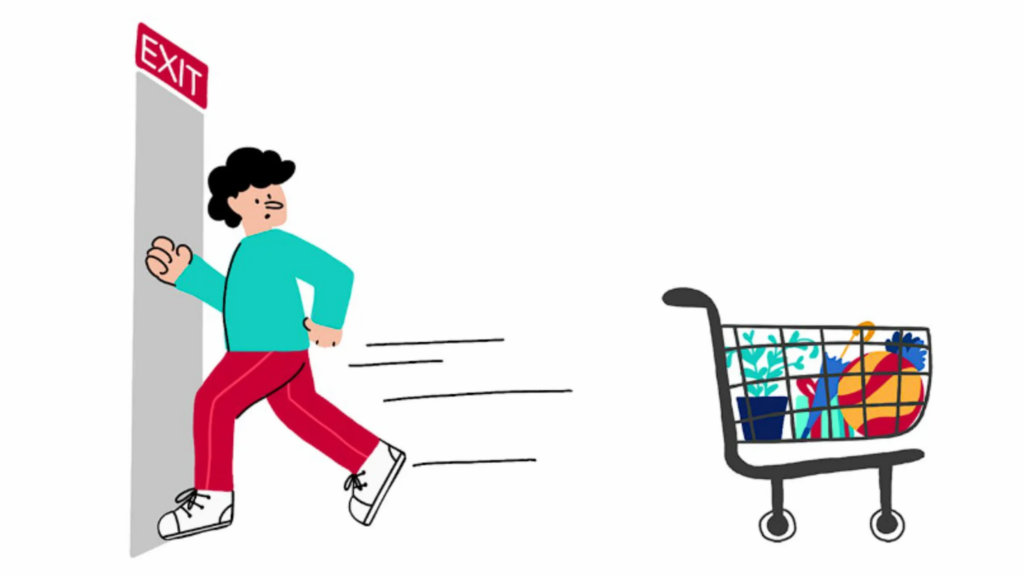
Let’s talk about the economic impact of a broken checkout experience. The average cart abandonment rate across e-commerce hovers around 70%. Yes, seven out of ten potential customers are leaving without completing their purchase.
In the online course world, this problem is even more acute because educational transactions are competing for attention and disposable income in ways that traditional e-commerce products don’t. A student considering a $297 course bundle isn’t just deciding whether to buy, they’re deciding whether to invest time in learning, whether the content is worth the money, and whether your platform feels trustworthy enough to process their payment.
Without a professional, streamlined e-commerce experience, you’re automatically losing a percentage of these conversions. Here’s the math: If you’re reaching 1,000 potential students per month and operating at a typical 2-3% conversion rate (which is already below industry standards for course sales), you’re converting 20-30 students. With a $297 average course price, that’s roughly $5,940-$8,910 in monthly revenue from that traffic.
But what if your checkout experience was optimized? What if students could see multiple payment options? What if the process took 60 seconds instead of 3 minutes? Research shows that optimizing checkout can recover up to 35.26% of lost sales. For that same 1,000 students, even a conservative recovery of 15% lost conversions could add an extra $15,000-$20,000 annually.
Now multiply that across a year. A single year of suboptimal checkout could cost you $75,000 to $240,000 in lost revenue just from abandonment. And this doesn’t even factor in repeat customers, upsells, or lifetime value.
Payment Friction at the Checkout

The specific friction points created by limited payment options are particularly damaging. According to research, 48% of cart abandonment is directly attributable to unexpected costs appearing at checkout, while 9% of users abandon because there aren’t enough payment method options. Students today expect flexibility. They want to use their preferred payment method; whether that’s a credit card, mobile wallet, UPI (in India), Buy Now Pay Later, or regional payment methods.
When you’re limited to PayPal, you’re automatically excluding customers who prefer other methods. International students especially face friction, Stripe alone supports over 135 currencies and payment methods, while PayPal’s regional support, though broad, still doesn’t match the flexibility that modern learners expect.
The 2nd Hidden Cost: Massive Administrative Overhead

Now let’s move beyond the revenue loss and talk about the invisible cost that’s eating your team’s time and sanity: manual administrative work.
When you don’t have integrated e-commerce, here’s what happens:
Students purchase a course through PayPal (or another payment method).
👉 Your finance team receives a notification.
👉 Someone manually checks if payment was received.
👉 Another person manually looks up the student in your system.
👉 A third person or automated process attempts to enroll them in the course which may or may not work seamlessly.
👉 If there are issues, your support team gets dragged in to troubleshoot.
👉 Someone reconciles the transaction with your accounting.
👉 Finally, you generate an invoice manually.
Each of these steps involves human touch-points, and each touch-point is an opportunity for error.
Research on administrative time suggests that manually processing enrollment and payment data can consume 5-15 minutes per transaction. With 100 course sales per month, that’s 500-1,500 minutes (8-25 hours) of labor per month just on administrative processing. At an average administrative salary of $35,000-$50,000 annually (approximately $17-$24/hour), that translates to $1,600-$6,000 per month in hidden labor costs or $19,200-$72,000 per year.
But it gets worse. Manual data entry error rates typically range from 4-7%, and each error cascades into additional troubleshooting, customer service interactions, and rework. A single error like enrolling a student in the wrong course or failing to process a refund costs far more than the initial transaction. You’re looking at not just the time to fix it, but also potential refund requests, customer dissatisfaction, and reputational damage.
The Cost of Fragmented Systems
If you’ve integrated external e-commerce with Moodle, you’re also dealing with the ongoing maintenance burden. Systems that don’t communicate seamlessly require constant monitoring, occasional manual syncs, and troubleshooting when data doesn’t flow correctly between platforms. Students may be enrolled in your course store but not in Moodle. Or they may have completed the course but the certificate system hasn’t been triggered. Or payment information isn’t syncing to your accounting software.
These aren’t just minor inconveniences, they’re time sinks. They’re customer service tickets. They’re frustrated students reaching out to support asking why their course access wasn’t activated immediately after purchase. Organizations managing manual enrollment processes report that a single application can be “touched” 30-35 times before it reaches completion, with each touch costing time and introducing risk of error.
The 3rd Hidden Cost: Missed Revenue Opportunities from Upsells and Bundling

Here’s something that most Moodle-only institutions don’t realize: they’re leaving enormous amounts of money on the table by not having sophisticated pricing and bundling capabilities.
The online course market has evolved. Successful course creators aren’t just selling single courses they’re creating:
– Course bundles that increase average order value by bundling related courses at a discount
– Tiered pricing that encourages upsells (basic → premium → VIP coaching)
– Subscriptions that create predictable recurring revenue
– Payment plans that make high-ticket offerings accessible
– Membership models that keep students coming back
– Bulk purchasing for organizations buying courses for their teams
The impact of bundling alone is substantial. When customers see bundled offerings, they perceive greater value and are more likely to purchase additional products. A basic bundle discount strategy can increase average order value by 30-50%, directly multiplying your revenue without requiring any new content creation.
Consider this: If you have 100 students per month purchasing individual $97 courses, you’re generating $9,700 in revenue. But if you offered those same students a strategically priced bundle of three courses for $197 (instead of $291 individually), and just 40% of them purchased the bundle instead of individual courses, you’d generate approximately $13,486 in revenue from the same number of students a 39% increase with zero additional content development.
Now scale that:
– 500 students per month: $195,000+ additional annual revenue from optimized bundling alone
– 1,000 students per month: $390,000+ additional annual revenue
Without proper e-commerce functionality, you can’t offer bundling. You can’t offer payment plans. You can’t create subscription models. You’re trapped in a single-course, single-payment model that handicaps your revenue potential.
The 4th Hidden Cost: Inferior User Experience and Lost Repeat Business

Here’s an uncomfortable truth: when your checkout experience is fragmented or clunky, you’re not just losing the immediate sale, you’re losing the customer’s trust and their likelihood of buying from you again.
The online course industry has seen explosive growth. Global e-learning revenue exceeded $185.2 billion in 2024 and is expected to grow at a CAGR of 8.6% to exceed $279 billion by 2029. But with that growth comes heightened expectations. Students have purchased courses from Coursera, Teachable, Kajabi, and other platforms built from the ground up to be great at e-commerce. When they come to your Moodle-powered course store and experience a subpar checkout, they notice. They feel it.
The checkout experience directly impacts user perception of quality and trustworthiness. A professional, streamlined checkout experience signals that you’re a serious business. A clunky, fragmented one signals the opposite that you’re an afterthought, that you don’t care about the customer experience, that maybe your course content isn’t professionally produced either.
This perception damage extends beyond the immediate purchase. Customers who have a poor checkout experience are less likely to recommend your courses, less likely to leave positive reviews, and significantly less likely to purchase additional courses or upgrades from you in the future. In a market driven heavily by word-of-mouth and social proof, this is devastating.
Consider the lifetime value impact: A customer who purchases one course for $97 might purchase three more courses at $97 each over the next 18 months ($291 total), refer two friends who each purchase one course ($194), and potentially upgrade to premium coaching ($2,000). Over time, that initial $97 customer is worth $2,579 to your business.
But if that first checkout experience is poor, they never make the second purchase. They never refer to anyone. They never upgrade. They might even leave a negative review that discourages others. The lifetime value plummets from $2,579 to $97.
The 5th Hidden Cost: Staff Training, Hiring, and Retention

When your systems are fragmented and require manual workarounds, you need more staff to manage them, and you need those staff members to understand multiple systems.
Hiring an enrollment specialist or course administrator to manage manual enrollments, payment processing, and data reconciliation costs $30,000-$45,000 annually in salary plus taxes and benefits (likely $35,000-$55,000 total). But here’s the kicker: if your systems were automated, you might not need that position at all, or you could consolidate these responsibilities into a half-time role.
That’s a $35,000-$55,000 annual savings by simply having better e-commerce infrastructure.
Beyond salary, there’s also turnover and training. Administrative roles managing manual processes tend to have high turnover because the work is repetitive and frustrating. Every time you lose someone and hire a replacement, you’re investing training time and dealing with productivity loss. Each employee turnover typically costs 50-200% of that person’s annual salary in replacement and training costs. This adds another hidden $17,500-$110,000+ every time you need to hire someone to replace a burned-out admin.
The Revenue Reality: Global E-commerce and Course Sales Benchmarks
To put these hidden costs in perspective, let’s look at what’s actually happening in the market.
The professional certificates market alone exceeded $6 billion in 2024, with an average revenue per user (ARPU) of $115. That’s not small. And the market is growing. By 2028, market volume is expected to grow at a CAGR of 8.56% to reach $8.93 billion.
Major platforms are seeing substantial traction:
– Udemy reported average monthly revenues of $26.3 million in 2024
– Teachable course creators earned $400 million in course sales in 2020 alone
– Kajabi saw course offers increase from 9.1 million in 2021 to 12 million in 2023
– Thinkific course creators earned over $275 million in 2021
These platforms aren’t succeeding because they have the best content. They’re succeeding because they have the best e-commerce infrastructure. They make purchasing easy. They make pricing flexible. They automate the entire enrollment and delivery process.
Now consider: If you’re operating a Moodle-based course business without integrated e-commerce, you’re competing against these giants while intentionally handicapping yourself.
What’s Actually Possible with Proper E-Commerce Integration
To understand what you’re missing, consider what modern e-commerce LMS integration enables:
Multiple Payment Gateways: Accept payments via Stripe, PayPal, Authorize.net, regional payment methods (UPI in India, Boleto in Brazil, etc.), digital wallets (Apple Pay, Google Pay), and Buy Now Pay Later options. This alone can increase conversions by 10-20% as you accommodate customer preferences.
Automated Enrollment: The moment a customer completes payment, they’re automatically enrolled in the course. No manual intervention. No delays. No customer service tickets asking “why don’t I have access?”
Course Bundling and Advanced Pricing: Create bundles of courses at discount prices, offer tiered pricing, subscription models, payment plans, and dynamic pricing based on customer segments. Research shows this can increase average order value by 30-50%.
Real-Time Reporting and Analytics: See exactly how many courses you sold, what your conversion rates are, which products are performing, and where your revenue is coming from. This data-driven visibility enables optimization.
Invoicing and Accounting Integration: Automatically generate professional invoices, sync transactions with accounting software, maintain compliant audit trails, and simplify tax reporting.
Single Sign-On and Seamless Experience: Students log in once and have access to everything: course store, learning platform, progress tracking, certificates. One credential. One experience. One interface.
Affiliate and Referral Programs: Encourage existing students to refer friends by offering commissions or discounts. Turn your user base into a marketing channel.
Flexibility to Sell Non-Course Products: Sell ebooks, templates, physical books, live coaching sessions, certificates. Don’t limit yourself to just courses.
Subscription and Membership Models: Create recurring revenue streams where students pay monthly or annually for access to a library of courses or community content.
All of this is enabled by proper e-commerce integration. All of this generates revenue that a basic Moodle installation is currently leaving on the table.
The Case for Integrated E-Commerce: Edwiser Store and Edwiser Bridge PRO
This is where solutions like Edwiser Store and Edwiser Bridge PRO become game-changers for Moodle-based institutions.
Edwiser Bridge PRO seamlessly integrates your Moodle site with WordPress and WooCommerce, enabling you to:
– Leverage WordPress’s SEO and marketing capabilities to drive traffic
– Use WooCommerce’s proven e-commerce infrastructure for course sales
– Support multiple payment gateways (not just PayPal)
– Offer course bundling, subscriptions, and payment plans
– Automate enrollment so students access courses immediately upon purchase
– Manage everything from a single dashboard
– Scale from one course to thousands without adding administrative burden
Edwiser Store (the dedicated e-commerce plugin for Moodle) takes this further by bringing native e-commerce capabilities directly into Moodle, enabling all of the above functionality without requiring a separate WordPress site though it still offers the benefits of WooCommerce integration if you want that flexibility.
The result: All the hidden costs we’ve discussed are eliminated or dramatically reduced.
– Revenue leakage from cart abandonment: Eliminated through professional checkout UX and multiple payment options
– Administrative overhead: Reduced to near-zero through automation
– Missed upsell opportunities: Unlocked through bundling, payment plans, and subscription capabilities
– Poor user experience: Replaced with a seamless, professional buying and learning journey
– Compliance headaches: Simplified through integrated reporting and accounting
– Staff burden: Reduced by 80-90% through automation
– Lost repeat customers: Prevented by building trust through a professional experience
The ROI Calculation: Why This Investment Pays for Itself
Let’s do the actual math on implementing proper e-commerce infrastructure for a mid-sized online learning business.
Scenario: An institution with 500 course enrollments per month at $197 average price (mix of individual courses and bundles).
Current Status (Moodle with PayPal only):
– Monthly revenue: $98,500
– Conversion rate: 1.8% (below industry standard)
– Cart abandonment: 70% (industry average)
– Administrative hours per month: 60 hours
– Monthly admin cost (at $18/hour): $1,080
– Annual revenue: $1,182,000
– Annual admin costs: $12,960
After implementing Edwiser Store or Edwiser Bridge PRO:
– Conversion rate increases to 2.8% (due to optimized checkout, multiple payment options)
– Cart abandonment reduces to 55% (through improved UX and payment flexibility)
– New monthly enrollments: 775 (42% increase)
– New monthly revenue: $152,675
– Administrative hours per month: 5 hours (automation)
– Monthly admin cost: $90
– Annual revenue: $1,832,100
– Annual admin costs: $1,080
– Net additional annual revenue: $650,100
– Net administrative savings: $11,880
– Total annual benefit: $661,980
Even if implementation, training, and subscription costs for Edwiser Store are $5,000-$15,000, the ROI is achieved within the first month. And this analysis is conservative it doesn’t factor in:
– Revenue from introducing payment plans (which typically increases AOV by 15-25%)
– Revenue from course bundling strategies
– Subscriptions and memberships
– Affiliate and referral programs
– Reduced chargeback rates (due to better payment processing)
– Reduced customer service costs
– Improved retention from better user experience
– Ability to scale without proportional staff increase
The Competitive Reality You Can’t Ignore
Here’s the uncomfortable truth: Your competitors have already figured this out. If you’re competing against course creators on Teachable, Kajabi, Thinkific, or even smaller competitors using Edwiser Store or similar solutions, you’re operating with one hand tied behind your back.
When a prospective student is choosing between your course and a competitor’s, price isn’t the only factor. Ease of purchase, payment options, content quality, user experience, and the feeling that they’re buying from a professional, trustworthy business all matter enormously.
A fragmented Moodle checkout experience telegraphs: “This instructor/organization isn’t serious about e-commerce. They’re treating it as an afterthought. This might not be a professional operation.”
Meanwhile, a professional, streamlined checkout experience says: “This is a real business. They’ve thought about the customer experience. Their course is probably professionally produced too.”
That perception gap translates directly into lost sales, lower conversion rates, and fewer repeat customers.
Moving Forward: The Solution is Within Reach
The good news? You don’t have to rebuild your entire Moodle installation or migrate to a new platform. Solutions like Edwiser Store and Edwiser Bridge PRO integrate seamlessly with your existing Moodle infrastructure while enabling all the e-commerce capabilities you need.
You can:
– Keep all your existing courses, user data, and learning configurations
– Avoid the massive migration project and disruption
– Add professional e-commerce capabilities in a matter of days
– Start benefiting from optimized checkouts, multiple payment gateways, and advanced pricing immediately
– Scale without proportional staff increases
– Compete on equal footing with dedicated course platforms
The investment to implement these solutions is modest. The ROI, as we’ve calculated, is substantial. The opportunity cost of not doing it is enormous.
The hidden costs of NOT having proper e-commerce features on Moodle are staggering:
– $75,000-$240,000 annually in lost revenue from cart abandonment
– $19,200-$72,000 annually in administrative labor costs
– $195,000-$390,000+ annually in missed revenue from unbundled pricing
– $17,500-$55,000 annually in unnecessary staff costs
– $2,000-$10,000 annually in compliance and accounting headaches
– Immeasurable brand damage from poor checkout experience
– Reduced repeat purchase rates and customer lifetime value
– Competitive disadvantage against better-equipped competitors
These costs compound and multiply across multiple years, turning a “nice to have” feature into a critical business necessity.
If you’re serious about monetizing your Moodle-based courses and scaling your online learning business, proper e-commerce infrastructure isn’t optional, it’s essential. And with solutions like Edwiser Store, implementing it has never been more straightforward.
The question isn’t whether you can afford to implement proper e-commerce on Moodle. The question is whether you can afford NOT to.
Ready to Transform Your Moodle Monetization?
Edwiser Store seamlessly integrates professional e-commerce capabilities with your Moodle site, enabling you to:
– Accept payments through 160+ payment gateways
– Offer course bundling and flexible pricing
– Automate enrollment and reduce administrative overhead by 80-90%
– Create subscriptions and membership models
– Generate professional invoices and maintain compliance
– Scale your business without adding staff
Discover how Edwiser Store can transform your course business from a hobby to a thriving revenue source. Schedule a demo today and see exactly how much revenue you’ve been leaving on the table.